Wholesale THCA Flower: Legal Insights for Buyers
Legal clarity is one of the most important factors for any smoke shop, distributor, or retailer evaluating whether to add THCA flower to their product mix. The short answer is that federally compliant THCA flower is legal under the 2018 Farm Bill — but the full picture is more nuanced than that, and the details matter significantly for wholesale buyers operating across multiple states.
Note: This article provides general information for educational purposes only and does not constitute legal advice. Laws change and vary by jurisdiction. Always consult a qualified attorney before making compliance decisions for your business.
The Federal Framework: The 2018 Farm Bill
The Agricultural Improvement Act of 2018 — commonly known as the 2018 Farm Bill — legalized hemp and hemp-derived products at the federal level. Under the Farm Bill, hemp is defined as cannabis sativa plants and derivatives containing no more than 0.3% Delta-9 THC on a dry weight basis.
THCA flower that meets this threshold is classified as hemp under federal law. This is the legal foundation on which the wholesale THCA flower market operates. The plant tests below the 0.3% Delta-9 THC limit at the point of harvest and sale, making it legally hemp regardless of its THCA content.
How THCA Becomes THC: The Decarboxylation Question
The nuance that regulators, law enforcement, and legislators have focused on is the fact that THCA converts to THC when exposed to heat — a process called decarboxylation. When a consumer smokes or vaporizes THCA flower, the THCA converts to THC and produces psychoactive effects.
This has led some states and regulatory bodies to argue that THCA flower should be treated as THC-containing cannabis regardless of how it tests prior to decarboxylation. The federal government has not provided definitive regulatory guidance on this specific question, which creates an area of legal ambiguity that wholesale buyers need to monitor closely.
The DEA's "Total THC" Position
The Drug Enforcement Administration has issued guidance suggesting that "total THC" — calculated by adding Delta-9 THC and a conversion of THCA — is the more appropriate measure of THC content for regulatory purposes. Under this interpretation, high-THCA flower that converts to THC levels above 0.3% upon heating could potentially be treated as a controlled substance.
This position has not been formally codified into federal law or regulation, and courts have not uniformly adopted it. However, it represents a risk factor that sophisticated wholesale buyers should understand when evaluating their exposure.
State Law: Where It Gets Complex
State laws on THCA flower vary significantly and change frequently. Several states have taken explicit positions that affect wholesale buyers:
States with Restrictions or Bans
Several states have enacted legislation specifically targeting hemp-derived THC products including THCA flower. These states may require licensing, impose potency limits, or prohibit the sale of products that convert to THC above specified levels. The list of states with restrictions changes as legislation evolves, so buyers should verify current status in each state where they operate.
States Following the Federal Framework
Many states follow the federal Farm Bill definition of hemp and permit the sale of compliant THCA flower without additional state-level restrictions. In these markets, wholesale buyers with proper documentation and compliant product face the most straightforward operating environment.
States with Ambiguous Status
A number of states have not explicitly addressed THCA flower in their statutes, creating regulatory ambiguity. In these markets, wholesale buyers operate with some degree of uncertainty and should document their compliance posture carefully.
What Wholesale Buyers Should Do to Protect Themselves
Regardless of where you operate, there are practical steps that reduce your legal exposure when buying and selling THCA flower wholesale.
Maintain Complete Documentation
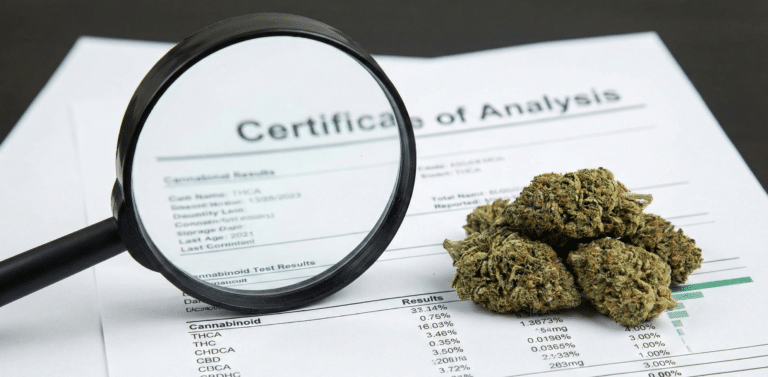
Keep lot-specific Certificates of Analysis for every batch of THCA flower you purchase. These documents demonstrate that the product you received tested as compliant hemp at the point of sale. Maintain purchase records, supplier information, and chain of custody documentation.
Work Only with Compliant Suppliers
Purchase exclusively from suppliers who can provide current, third-party lab COAs for every batch. Avoid suppliers who cannot or will not provide this documentation. Your exposure is directly tied to the compliance posture of your supply chain.
Monitor State Law in Your Markets
Assign someone in your organization the responsibility of monitoring regulatory developments in every state where you sell THCA flower. Sign up for state hemp association newsletters and consult with legal counsel in key markets.
Consult Legal Counsel
If you are building a significant wholesale THCA flower business, invest in a relationship with an attorney who specializes in hemp law. The cost of qualified legal advice is minimal compared to the potential cost of operating in a market that subsequently restricts or prohibits your product.
The Bottom Line for Wholesale Buyers
Federally compliant THCA flower operates in a legal framework established by the 2018 Farm Bill and represents a significant commercial opportunity for smoke shops, distributors, and hemp brands. The key variables are state law in your operating markets, documentation discipline, and supplier compliance.
Buyers who operate with proper documentation, compliant supply chains, and current awareness of state-level regulatory developments are well positioned to participate in this market responsibly and sustainably.