What’s the Difference Between THC and THCA?
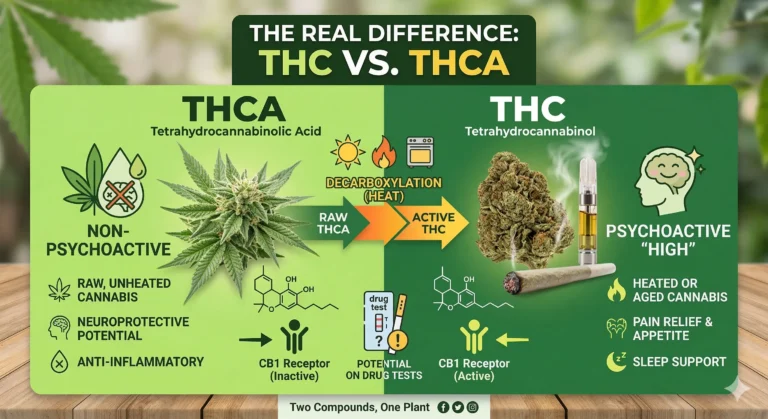
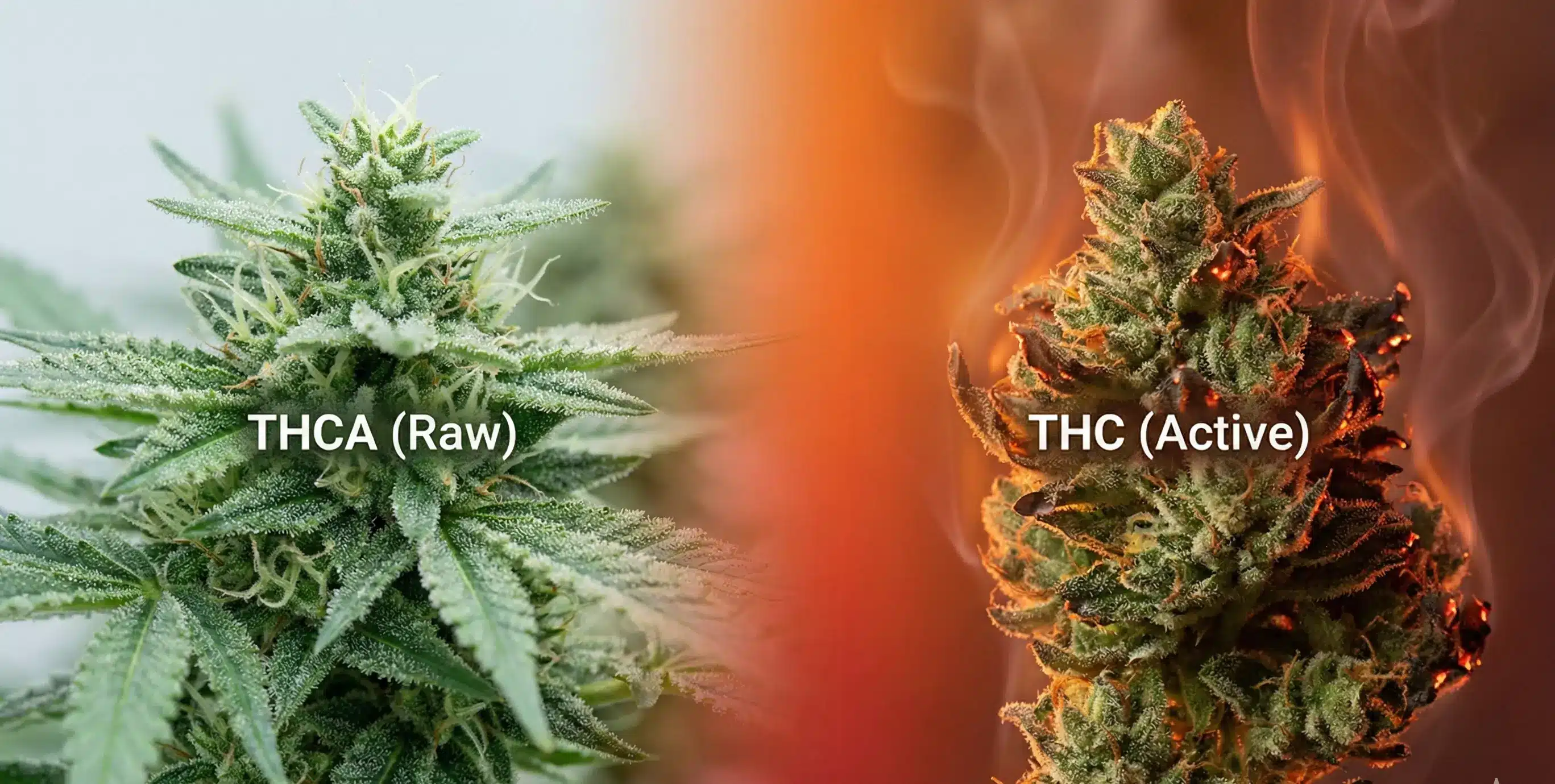
The difference between THC and THCA comes down to one thing: heat. THCA (tetrahydrocannabinolic acid) is the raw, natural form of the compound found in the cannabis plant. It is non-psychoactive — it will not get you high. THC (delta-9-tetrahydrocannabinol) is what THCA becomes the moment heat is applied. Smoke it, vape it, or cook it, and the THCA converts to active THC. That conversion is what produces the psychoactive effects cannabis is known for.
Let’s break down the difference between THC and THCA in plain English — the chemistry, the legal distinction, what it means when you smoke THCA flower, and why it matters more right now than it ever has before.
The Science: Why THCA and THC Are Different Compounds
THCA and THC are chemically almost identical. The only structural difference is that THCA carries an extra carboxyl group (–COOH) attached to its molecular chain. That single addition makes the THCA molecule slightly larger — too large, in fact, to fit properly into the brain’s CB1 cannabinoid receptors. No receptor binding means no psychoactive effect. This is why eating raw cannabis flower does nothing intoxicating — the THCA is intact and can’t activate the receptors responsible for the high.
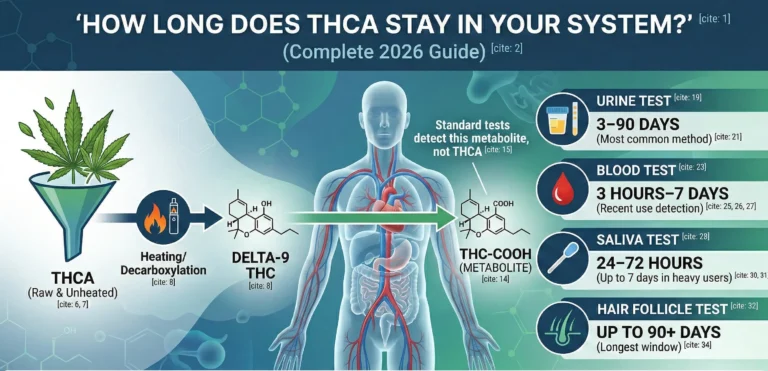
When heat is applied, a chemical reaction called decarboxylation strips that carboxyl group away, releasing carbon dioxide and leaving behind active THC. The THC molecule is now the right shape to bind to CB1 receptors, and the psychoactive effects follow. This happens automatically when you light a joint, draw on a vape, or bake cannabis into an edible — decarboxylation is instant at combustion temperatures.
The conversion is not perfectly efficient. The standard formula used across the industry is:
Total THC = (THCA × 0.877) + delta-9 THC
The 0.877 accounts for the molecular weight lost when the carboxyl group is released. So a flower labeled 25% THCA and 0.2% delta-9 THC has a potential total THC of approximately 22.1% when smoked — comparable to high-potency dispensary flower. The label says hemp. The experience says otherwise.
The Legal Distinction: How THCA Created the Hemp Flower Market
Understanding the legal difference between THC and THCA requires going back to the 2018 Farm Bill, which federally legalized hemp by defining it as cannabis containing no more than 0.3% delta-9 THC on a dry-weight basis. The law said nothing about THCA. That single omission opened a significant gap.
A cannabis plant with 25% THCA and 0.15% delta-9 THC passes the federal test as legal hemp — even though smoking it delivers a high equivalent to marijuana. Farmers grew it legally, distributors shipped it legally, and smoke shops stocked it legally. The product that emerged from this framework is what the industry calls THCa flower: high-potency hemp flower that is federally compliant in its raw state but converts to active THC at the point of consumption.
That framework is now being rewritten. In November 2025, Congress passed the Continuing Appropriations Act, 2026 (P.L. 119-37), which redefines hemp to include total THC — meaning THCA now counts toward the 0.3% threshold. Under this new standard, virtually all high-THCa flower would be reclassified as marijuana under federal law. The law takes effect November 12, 2026. A bipartisan group of legislators has introduced the Hemp Planting Predictability Act to push that deadline to November 2028, but as of this writing the bill has not passed and the November 2026 date remains operative.
The legal distinction between THC and THCA — which created a multi-billion dollar market — is based entirely on whether heat has been applied. That distinction is now, for the first time, under direct federal challenge.
THC vs. THCA: Side by Side
| THCA | THC (Delta-9) | |
|---|---|---|
| Full name | Tetrahydrocannabinolic acid | Delta-9-tetrahydrocannabinol |
| State | Raw, unheated — found in live and freshly harvested cannabis | Activated — produced by heat through smoking, vaping, or cooking |
| Psychoactive? | No — cannot bind effectively to CB1 receptors in raw form | Yes — binds to CB1 receptors and produces the cannabis high |
| Relationship | Precursor to THC — converts via decarboxylation | The active form THCA becomes when heated |
| On product labels? | Yes — THCa flower typically shows 15–30%+ THCA | Yes — in dispensary products, edibles, and concentrates |
| Federal legal status (current) | Legal as hemp if delta-9 THC is ≤0.3% on a dry-weight basis | Schedule I controlled substance federally; legal in licensed state markets |
| Federal legal status (Nov 2026) | Reclassified as marijuana if total THC including THCA exceeds 0.3% | No change |
| Conversion formula | THCA × 0.877 = equivalent THC potency when smoked | N/A — THC is already in its active form |
What Happens When You Smoke THCA Flower?
This is the question behind most searches on the difference between THC and THCA, so here is the direct answer: when you smoke or vape THCA flower, the heat triggers instant decarboxylation. The THCA converts to active THC in real time, at the moment of combustion. The experience is functionally the same as smoking marijuana flower of equivalent potency — because at the chemical level, that is exactly what is happening.
THCa flower is not a workaround or a synthetic product. It is cannabis flower — grown, harvested, and tested in its raw state, where it qualifies as hemp under the 2018 Farm Bill’s delta-9 THC standard. The intoxicating effect is a direct consequence of decarboxylation at the point of consumption, not of any manufacturing process. The plant produces THCA naturally. Heat does the rest.
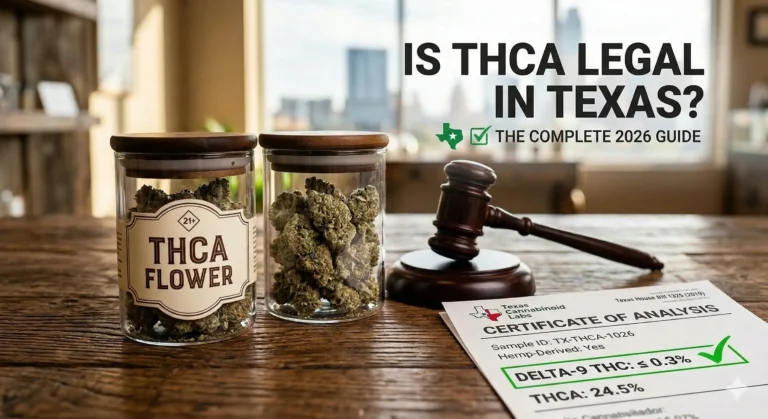
This is also why reading a COA (Certificate of Analysis) correctly matters. A compliant THCa flower product will show a delta-9 THC percentage at or below 0.3% — that is the number that determines federal legality under the current standard. The THCA percentage will be much higher, often 20–28%. That number represents the potential THC potency when smoked, not a compliance violation. Know which number your COA is reporting before you stock or ship.
Does THCA Have Any Effects Without Heat?
In its raw, unheated form, THCA does interact with the body — just not through the CB1 receptors responsible for intoxication. Early research suggests THCA may have anti-inflammatory and neuroprotective properties, and some wellness-focused consumers specifically seek it out in its raw state by juicing fresh cannabis leaves. At these quantities, THCA functions more like a nutritional supplement than a psychoactive compound.
For the purposes of the hemp retail market, however, the practical reality is straightforward: THCA flower is purchased to be smoked. That means decarboxylation occurs at the point of use, and the THCA becomes active THC. The effects are those of THC, not of raw THCA. Any product discussion, potency comparison, or compliance conversation should be framed with that in mind.
What This Means for Smoke Shop Owners
If you stock hemp flower, understanding the difference between THC and THCA is not just a science question — it has direct operational implications for your business.
Read your COAs correctly
Under the current 2018 Farm Bill standard, compliance is determined by delta-9 THC concentration — not total THC, not THCA. Your COA should clearly show delta-9 THC at or below 0.3% by dry weight. If a supplier provides a COA showing “total THC” (which includes THCA in the calculation using the 0.877 formula), the number will appear dramatically higher and does not reflect current federal compliance standards. Know which calculation your lab is using before you accept a shipment.
Understand the November 2026 change
The November 2025 legislation changes the compliance standard from delta-9 THC alone to total THC including THCA, capped at 0.3% on a dry-weight basis. If that takes effect as written on November 12, 2026, high-THCa flower will no longer qualify as federally legal hemp. Plan your inventory and supplier relationships around that date. The Hemp Planting Predictability Act could push it to 2028, but it has not passed — treat any extension as upside, not a given.
Margin matters more in a timed market
Whether the legal runway ends in 2026 or extends to 2028, the economics of buying wholesale THCa flower direct from a compliant supplier rather than through a distributor are the same: every layer you remove puts more margin back in your pocket. Smoke shops stocking direct from a Farm Bill-compliant wholesaler — with verified COAs, same-day shipping, and no middleman markup — are better positioned regardless of how the legislative picture resolves.bulk THCa flower pounds
The Bottom Line
The difference between THC and THCA is a single chemical reaction triggered by heat. THCA is the raw, inactive precursor found in the cannabis plant. Apply heat and it becomes active THC — instantly, at the moment of combustion. The legal framework that separated them, and made the THCa flower market possible, was built on that raw/heated distinction. That framework is now being rewritten by Congress, with a deadline that most people in the market are not adequately prepared for.
Understanding this distinction clearly — the chemistry, the compliance implications, and the legislative timeline — is what separates informed operators from those who get caught off guard. The question of what’s the difference between THC and THCA has a simple chemical answer. The business answer is more consequential, and the window to act on it is defined.
Frequently Asked Questions
What is the main difference between THC and THCA?
THCA is the raw, non-psychoactive form of the compound found in the cannabis plant. THC is the active, psychoactive form it becomes when heat is applied through smoking, vaping, or cooking. The chemical difference is a single carboxyl group that decarboxylation removes.
Does THCA get you high?
Not in its raw form. THCA cannot bind effectively to the brain’s CB1 receptors due to its larger molecular structure. However, when THCA flower is smoked or vaped, the heat converts it to active THC instantly. The resulting experience is the same as smoking cannabis of equivalent THC potency.
Is THCA flower legal?
Under the current 2018 Farm Bill standard, THCA flower with delta-9 THC at or below 0.3% on a dry-weight basis is federally legal hemp. A November 2025 law (P.L. 119-37) changes the definition to include total THC including THCA, taking effect November 12, 2026. State laws vary. Always verify compliance in your specific state before purchasing or stocking.
How do you convert THCA to THC percentage?
Use the standard decarboxylation formula: Total THC = (THCA × 0.877) + delta-9 THC. The 0.877 factor accounts for the molecular weight lost when the carboxyl group is released. A flower with 25% THCA and 0.2% delta-9 THC has a potential total THC of approximately 22.1% when smoked.
Why do hemp flower labels show high THCA but low THC?
Because the 2018 Farm Bill defined hemp legality based on delta-9 THC concentration only. Growers produce cannabis with high THCA content that tests below 0.3% delta-9 THC — qualifying it as legal hemp — even though it converts to high-potency THC when smoked. This is the mechanism the November 2025 legislation was specifically designed to close.
What is decarboxylation?
Decarboxylation is the chemical process that converts THCA into active THC. It is triggered by heat — combustion when smoking, vaporization when vaping, or sustained oven temperature when making edibles. The reaction strips the carboxyl group from the THCA molecule, releasing carbon dioxide and producing THC. It happens automatically and instantly when cannabis is smoked or vaped.
How do I read a COA for THCa flower?
Look for the delta-9 THC percentage — this must be at or below 0.3% on a dry-weight basis for the product to qualify as federally legal hemp under the current standard. The THCA percentage will typically be much higher (15–30%+) and is not a compliance issue under current law. Be aware that some labs report “total THC” using the 0.877 conversion formula — that number includes THCA and will appear much higher than the delta-9 figure alone. Confirm which metric your COA is reporting.