How Long Does THCA Stay in Your System
Complete 2026 Guide
If you’ve recently consumed THCA products and have an upcoming drug test — or you’re simply curious about how your body processes this cannabinoid — you’re in the right place. This guide answers everything you need to know about how long THCA stays in your system, how it’s metabolized, and what factors affect detection time.
What Is THCA?
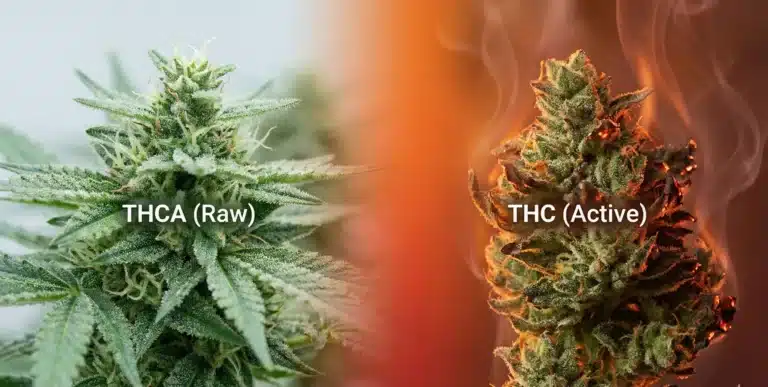
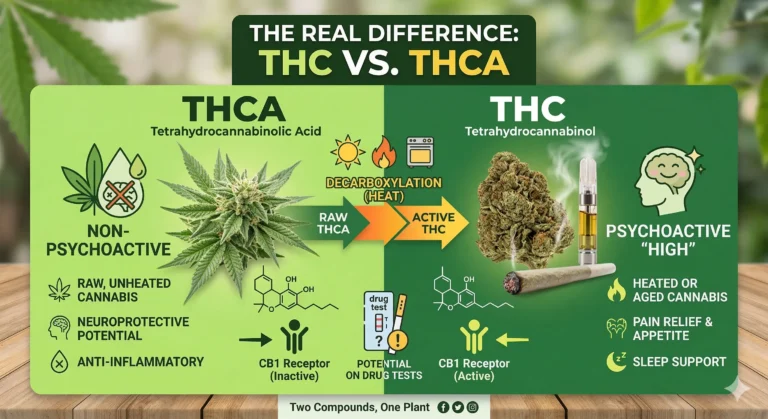
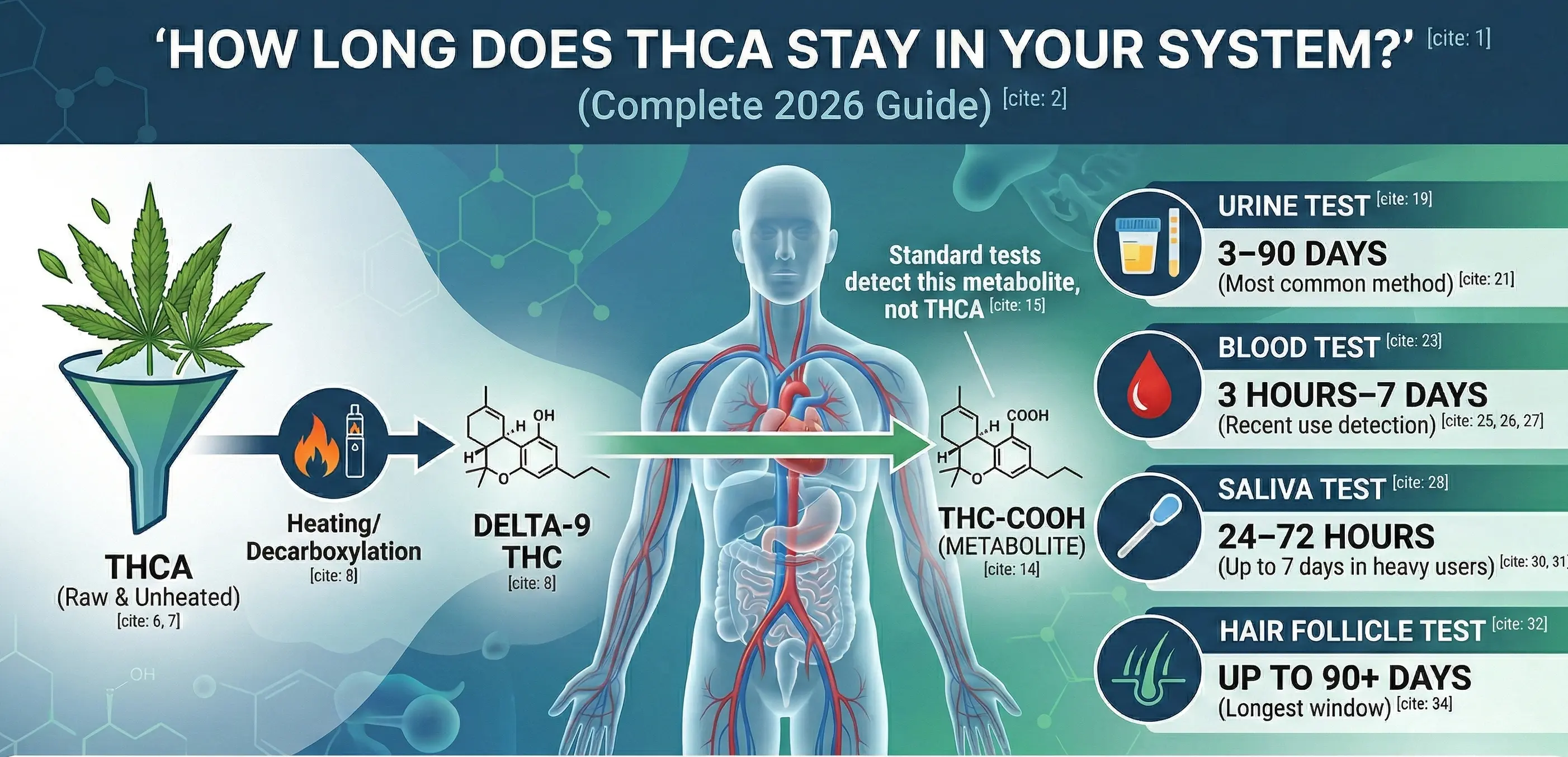
THCA (tetrahydrocannabinolic acid) is the raw, non-psychoactive precursor to THC found naturally in the cannabis plant. In its unheated form, THCA does not produce a high. However, when exposed to heat — through smoking, vaping, or cooking — THCA undergoes a chemical process called decarboxylation, converting into Delta-9 THC, the compound responsible for cannabis’s intoxicating effects.
THCA has gained significant popularity in 2024–2025 due to its legal gray-area status in many U.S. states and its availability in hemp-derived products. But despite its technically non-psychoactive raw form, many users are asking the critical question: how long does THCA stay in your system?
Does THCA Show Up on a Drug Test?
This is one of the most important things to understand: yes, THCA can cause a positive drug test. Here’s why:
When you consume THCA via smoking or vaping, it converts to Delta-9 THC before entering your bloodstream.
Your body then metabolizes THC into THC-COOH (11-nor-9-carboxy-THC), which is the primary metabolite drug tests look for.
Standard urine, blood, saliva, and hair drug tests do not distinguish between THC derived from THCA products or traditional cannabis — they detect the same metabolites.
So even though THCA itself may be technically legal in some states, consuming it in ways that convert it to THC (i.e., smoking or vaping) can absolutely result in a failed drug test.
How Long Does THCA Stay in Your System?
Detection windows vary significantly based on the type of drug test used and individual factors. Here are the general guidelines:
Urine Test (Most Common)
Urine testing is the most widely used method for employment and legal drug screenings.
| Usage Frequency | Detection Window |
|---|---|
| Single / occasional use | 3–4 days |
| Moderate use (a few times/week) | 5–7 days |
| Heavy daily use | 10–30 days |
| Chronic heavy use | Up to 45–90 days |
Urine tests detect THC-COOH, which is fat-soluble and can linger in the body well beyond the psychoactive effects.
Blood Test
Blood tests are less common but are used in roadside DUI testing and medical/legal situations.
THC is typically detectable in blood for 3–4 hours after use in occasional users.
In frequent or heavy users, THC can remain detectable in blood for up to 7 days.
Blood tests are better at detecting recent use because THC is rapidly cleared from the bloodstream.
Saliva Test
Oral fluid tests are increasingly used by employers and law enforcement.
THC is typically detectable in saliva for 24–72 hours after use.
In heavy users, detection may extend to up to 7 days.
Hair Follicle Test
Hair tests offer the longest detection window and are used when a history of drug use is being investigated.
THC metabolites can be detected in hair for up to 90 days — sometimes longer.
Hair tests are not effective at detecting very recent use (within the last 7–10 days).
Factors That Affect How Long THCA Stays in Your System
Not everyone metabolizes cannabinoids at the same rate. Several key variables influence detection time:
1. Frequency of Use
The more often you consume THCA/THC products, the longer metabolites accumulate and remain detectable. Occasional users clear THC much faster than daily consumers.
2. Dosage
Higher doses mean more THC metabolites are produced, increasing the detection window.
3. Body Fat Percentage
THC metabolites are lipophilic (fat-soluble), meaning they bind to fat cells. People with higher body fat percentages tend to retain THC metabolites longer.
4. Metabolism Rate
Individuals with faster metabolisms generally process and eliminate THC more quickly. Age, genetics, thyroid function, and activity level all play a role.
5. Method of Consumption
Smoking or vaping THCA converts it entirely to THC before absorption — maximum detection risk. Consuming raw THCA (juices, capsules, unheated tinctures) may result in lower THC conversion.
6. Hydration and Exercise
While staying hydrated supports overall metabolism, there is no proven way to significantly ‘flush’ THC. Vigorous exercise may temporarily increase THC blood levels by mobilizing stored fat.
7. Product Potency
Higher-potency THCA products naturally produce more THC upon consumption, leading to greater accumulation of metabolites.
THCA vs. THC: What’s the Difference for Drug Testing?
Many people assume that because THCA is labeled as a different compound than Delta-9 THC, it won’t trigger a drug test. This is a common — and potentially costly — misconception.
| Factor | THCA (Raw) | THCA (Heated/Smoked) |
|---|---|---|
| Psychoactive? | No | Yes (converts to THC) |
| Shows on drug test? | Unlikely | Very likely |
| Legal status (hemp-derived) | Often legal under 0.3% Delta-9 THC | Varies by state |
Key takeaway: If you’re consuming THCA in heated forms (flowers, vapes, concentrates), treat it exactly like consuming THC for drug test purposes.
How to Get THCA Out of Your System Faster
There are no guaranteed methods to instantly eliminate THC metabolites. However, these evidence-informed strategies may support natural clearance:
Stop consuming THCA/THC immediately — the sooner you stop, the sooner your body can begin clearing metabolites.
Stay well-hydrated — proper hydration supports kidney function and healthy elimination.
Exercise regularly — aerobic exercise supports metabolism (avoid intense workouts immediately before a test).
Eat a balanced, high-fiber diet — may help with metabolite excretion.
Allow time — ultimately, time is the only truly reliable factor.
⚠️ Warning: Be wary of ‘detox drinks,’ kits, or supplements that claim to mask or eliminate THC. Many do not work as advertised and some can raise red flags on drug tests (diluted or adulterated samples).
Frequently Asked Questions
Can I pass a drug test if I only use raw THCA that hasn’t been heated?
Possibly, but it’s not guaranteed. Raw, unheated THCA undergoes minimal conversion to THC. However, if consumed in large enough quantities, trace amounts of THC conversion can still occur. Consult a medical professional if you have a critical test upcoming.
Is THCA legal?
THCA derived from hemp with less than 0.3% Delta-9 THC on a dry weight basis is federally legal under the 2018 Farm Bill. However, state laws vary widely. Always check your local laws.
How does THCA affect a first-time user vs. a chronic user?
First-time or infrequent users typically clear THCA-derived THC metabolites within 3–5 days. Chronic daily users may test positive for 30–90 days or more after cessation due to deep fat tissue storage.
Will secondhand smoke from THCA products show up on a drug test?
In most cases, secondhand exposure is unlikely to produce a positive result at standard detection thresholds. Extended, enclosed exposure to heavy smoke could theoretically cause a borderline positive.
Final Thoughts
So, how long does THCA stay in your system? The honest answer is: it depends. For occasional users who consume heated THCA products, metabolites may clear in 3–7 days. For heavy, regular users, detection can extend for weeks or even months — particularly in urine and hair follicle tests.
If you have a drug test coming up, the safest approach is to stop consuming all THCA products well in advance, stay hydrated, and give your body the time it needs to naturally clear THC metabolites.
Always consult a healthcare professional for personalized advice, especially if you use THCA products for wellness purposes and are subject to workplace or legal drug screenings.
Disclaimer: This article is for informational purposes only and does not constitute medical or legal advice. Laws around THCA and cannabis vary by jurisdiction. Always check your local regulations.